
This review has been a long time coming. I first started using the Femometer Ring in December 2023 and have been testing it on and off ever since. After sharing several Femometer Ring chart overview videos on TikTok, I frequently get asked for updates and my final thoughts on this wearable device. So, here it is—the review you’ve been waiting for!
Why Wearable Thermometers Are Popular for Fertility Charting
Wearable temperature devices are increasingly popular for fertility charting, and it’s easy to see why. Devices like the Femometer Ring are worn throughout the night and automatically record your temperature when synced in the morning. This means no more waking up at the crack of dawn or stressing about taking your temperature at the exact same time each day, as is required with traditional basal body thermometers.
However, it’s important to note that most wearable thermometers, including the Femometer Ring, measure skin temperature rather than internal temperature. This means they don’t provide a true basal body temperature. For most people, this isn’t a dealbreaker. But if you’re charting to avoid pregnancy and need the highest level of accuracy, I recommend sticking with a standard basal body thermometer or an evidence-based, temperature-free method.
Features and Usability of the Femometer Ring
The Femometer Ring comes in four sizes, ranging from size 6 to 9, so most people should find a comfortable fit. You can actually purchase a low-cost sizing kit on Amazon to make sure you get the right size.
The ring’s exterior is porcelain, with an inside coated in UV paint, and the metal contact points are silver-plated. It includes a USB corded charging base, which charges the ring fully in about an hour. A full charge lasts up to 10 days, which has matched my experience as I typically charge mine every 7-10 days.
To get a reading, the ring must be worn for at least four hours overnight. From my experience, it works well even if you have periods of wakefulness throughout the night, as long as you keep it on the entire time.
In the morning, syncing the ring with the Femometer App is straightforward. I usually take the ring off my finger and put it right back on, which seems to activate the syncing process. If that doesn’t work, placing it on the charger activates syncing immediately, as long as the app is also open.
Is the Femometer Ring Worth the Price?
At $150, the Femometer Ring is the most affordable wearable for fertility charting that I know of. But is it worth the investment?
I always strive to be transparent in my reviews. I don’t just say what people want to hear—I want to provide you with all the facts, share my personal experience, and offer an educated opinion so you can make an informed decision. (And yes, I do earn a small commission if you purchase through my links, but my goal is to give you the truth, not just make a sale.)
So, in the spirit of full transparency, let me share a bit of my health background, as it may have impacted my experience with the ring.
Personal Health Factors That May Have Influenced My Experience
I have PCOS, which I’m currently managing with metformin. Although I’m cycling and ovulating regularly, I tend to ovulate later than average (around day 18 of my cycle). I also have chronically low progesterone and a history of high prolactin levels. During the time I’ve been using the Femometer Ring, I’ve also been breastfeeding, though my cycles had already returned before I started using it. All of these factors can affect ovulation and basal body temperature.
Given all that, my initial experience with the Femometer Ring was rocky. The temperature patterns were quite erratic at first. However, Femometer frequently releases firmware updates, and I’ve noticed that the temperature patterns have become much more reliable over time. While some of this improvement could be due to my personal health, I believe it also reflects Femometer’s ongoing efforts to improve the device.
I think it’s a great sign that not only is the device becoming more reliable, but that Femometer as a company cares enough about user experience to keep making these improvements.
Let’s Go Over Some Charts
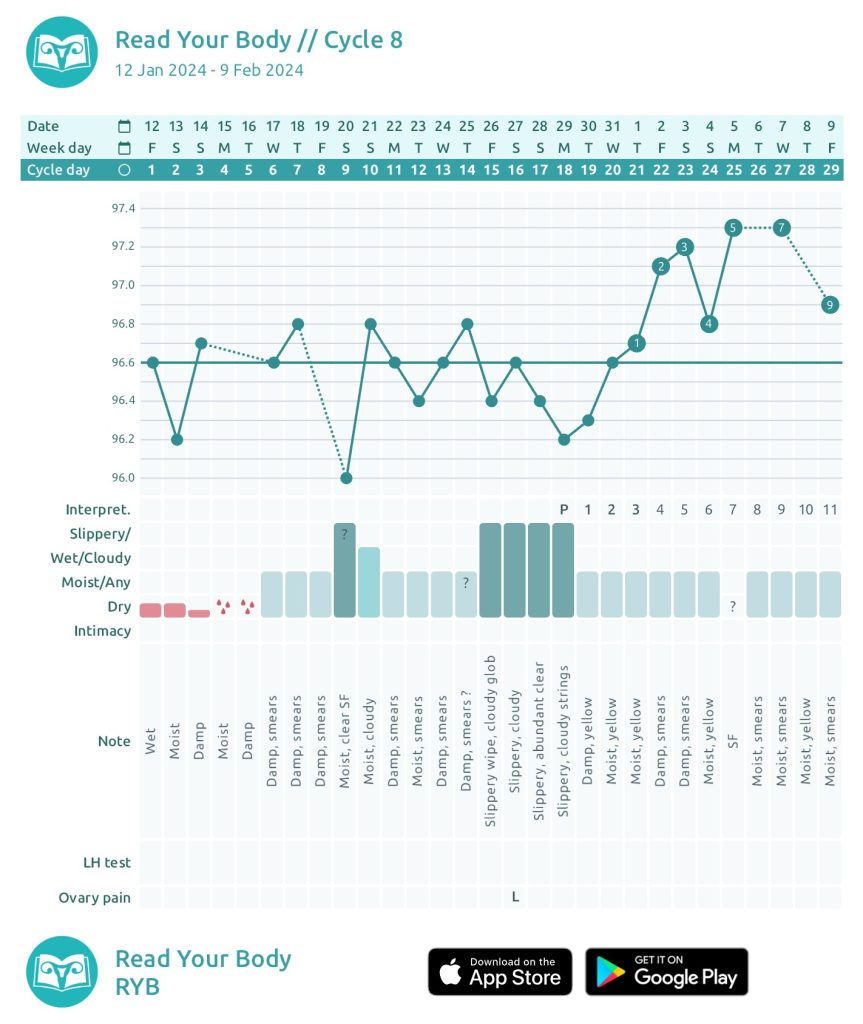
This was one of my first charts with the Femometer Ring. The jumpy temperatures were discouraging and I had little trust in the device at this point.
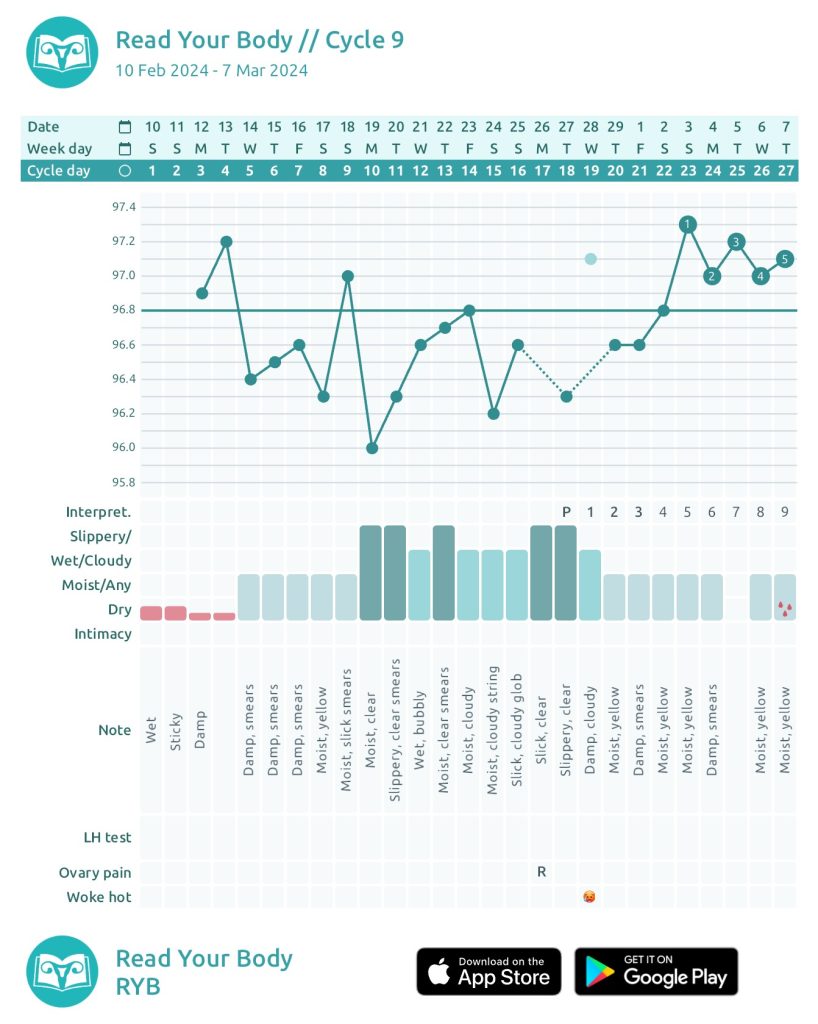
The next cycle was maybe slightly better than the last but still very jumpy overall. I also experienced a delayed temperature shift compared to my mucus peak day. However, I don’t know if this is a problem with the device itself (I have experienced delayed shifts with other wearables that were caused by the device itself), or if it’s due to my low progesterone levels causing a slow rise in temperature after ovulation.
Femometer Ring temperatures are IN RED on this chart (teal is Tempdrop). In this cycle the improvements to the device are more obvious and I didn’t experience a delayed shift (I did take a high dose of progesterone in the previous luteal phase). But my temperature shift was very erratic and would not have been confirmed with some symptothermal methods. Again, I don’t know if this is the device or my hormones.
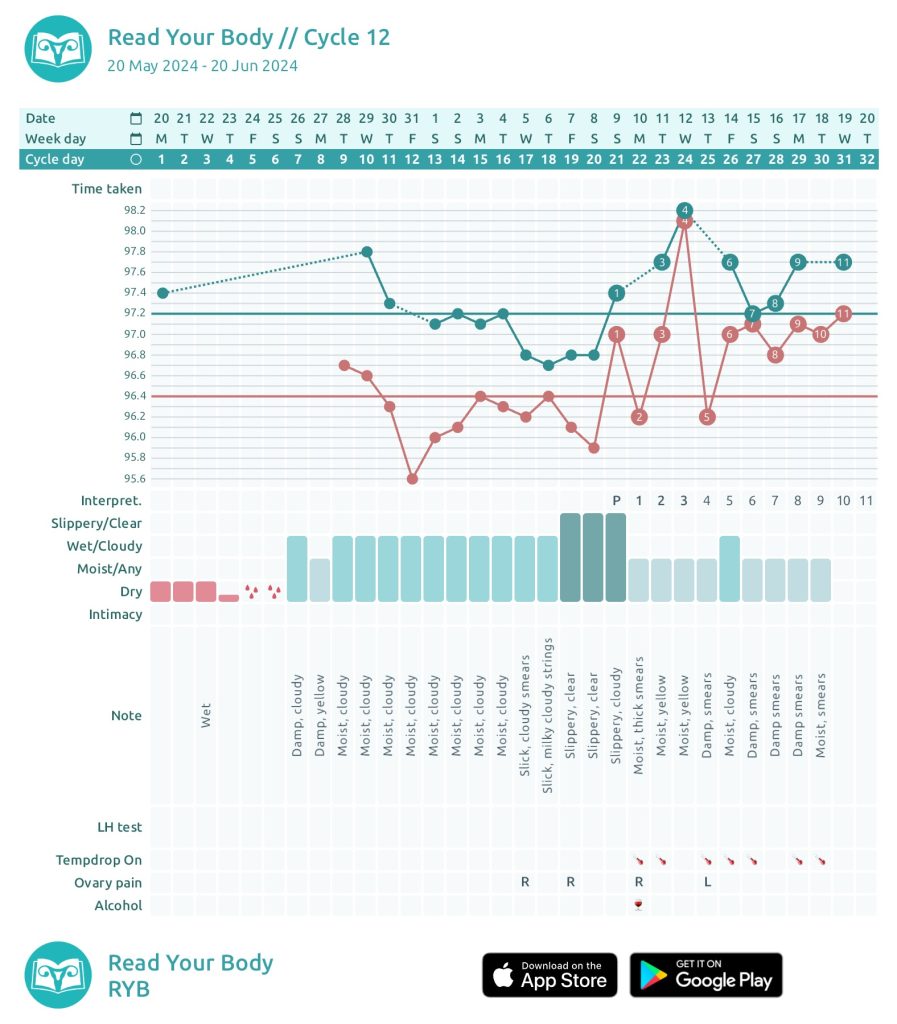
This is my most recent cycle. Again, Femometer Ring temperatures are IN RED, teal is Tempdrop. The overall pattern is much more smooth, I only had a couple of temperatures that I would consider erratic. I did experience a delayed temperature shift.
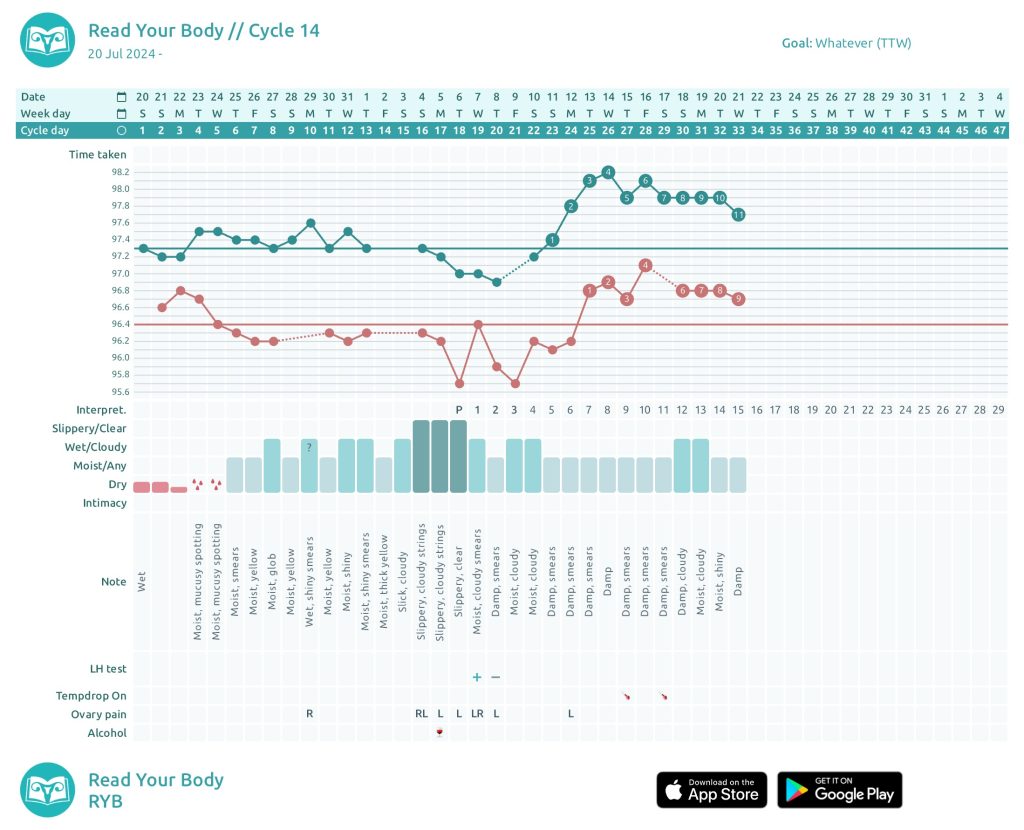
Firmware updates were rolled out regularly throughout these cycles, and I noticed clear improvements in the temperature patterns over time. The fact that my latest chart is significantly clearer than the earlier ones gives me hope that this device can be reliable for at least some users. However, I haven’t seen many charts from other users yet. The few charts I have come across were from the same time period as my earliest ones and showed similar erratic patterns.
It’s important to remember that not all wearables work well for everyone. There’s always a chance that the Femometer Ring might not be the right fit for you. However, given its affordable price point, I do think it’s worth trying. And if it doesn’t work out, fertility devices often have good resale value.
Who Should Consider the Femometer Ring?
At this point, after 8 months of use, due to the potential impact of my health issues I think I’ve gone as far as I can in trialing the Femometer Ring to help others’ decide if it’s a viable option. So here is my overall recommendation based on my personal experience.
- If You’re Trying to Conceive (TTC): The Femometer Ring is a good option for simplifying your charting practice. It’s convenient, easy to use, and reliable enough for tracking fertility while TTC.
- If You’re Open to Conceiving Again in the Future: If you’re charting to avoid pregnancy but might consider conceiving later or are okay with the possibility of an unexpected pregnancy, the Femometer Ring could work for you. However, if high efficacy in your fertility awareness practice is crucial, a standard BBT thermometer or a temperature-free method would be more reliable alternatives.
- If You’re Charting to Avoid Pregnancy: The level of risk you’re comfortable with should guide your decision. If you’re very strict about avoiding pregnancy and would consider abortion or adoption, or if pregnancy would be life-changing for you for any reason, I do not recommend the Femometer Ring. In this case, a standard oral (or vaginal) basal body thermometer, which has been thoroughly studied with fertility awareness, would be a better choice.
Understanding the Limits of Temperature Charting
Basal body temperature rises after ovulation due to increased progesterone levels, meaning it can only confirm ovulation once it’s already occurred. Unfortunately, temperature tracking alone can’t predict when ovulation is approaching.
Many apps that predict ovulation rely on outdated methods and general cycle data rather than real-time fertility signs. Apps using only temperature often estimate ovulation based on average cycle lengths and historical temperature shifts, which can change at any time (stress, illness, and travel are the most common things that can change your cycle).
For more effective fertility awareness charting, it’s essential to use additional biomarkers to gauge your fertility status in real time. While BBT reflects progesterone levels post-ovulation, cervical mucus indicates estrogen levels and can signal the approach of ovulation, as estrogen begins to rise as the egg prepares for ovulation. Observing and charting cervical mucus, especially following evidence-based guidelines, can provide better insights into your fertile window.
If you decide to use the Femometer Ring, I strongly recommend combining it with other fertility signs like cervical mucus observations or LH testing. Pairing it with a manual charting app that allows you to follow evidence-based guidelines will increase the chances that you will be able to track and interpret your fertility accurately.
Thoughts on the Femometer App and Charting
While the Femometer Ring seamlessly syncs with the Femometer App to provide your daily temperature, I have reservations about recommending the app’s charting features for most users.
In my experience using the app since 2020, the chart interpretations are often accurate, but not always. While the temperature interpretations appear to be based on evidence-based methods and I’ve seen many charts correctly marked, app algorithms simply can’t replace the trained eyes of a human. Given the potential risk of a chart being interpreted incorrectly, I believe the risk is too high to rely on the app’s chart interpretations. It’s crucial to evaluate your charts holistically and cross-check your temperatures with cervical mucus observations and, optionally, LH testing.
For someone trying to conceive (TTC) and diligent with daily charting, the Femometer App might be sufficient. However, I would strongly advise against relying on it if you’re charting to avoid pregnancy. In that case, I recommend using the Read Your Body app in combination with an evidence-based fertility awareness method for more accurate and reliable charting. It is easy to enter your temperature daily from the Femometer App into Read Your Body.
My Final Thoughts
After eight months of use, I’m satisfied with my experience with the Femometer Ring and plan to continue using it for the foreseeable future. My next step is to start using my Femometer Vinca 2 alongside the ring to compare temperature patterns and see if that influences my opinion of the Femometer Ring. The Vinca 2 has always been my most reliable thermometer, so I’m curious to see how they compare.
If you’re intrigued by the Femometer Ring and think it might be the right fit for your fertility tracking needs, it’s definitely worth giving it a try. At its affordable price point, it offers a convenient way to monitor your temperatures. It can often be found on sale through Amazon. And if you decide to purchase through my links, you’ll be supporting my work (and my family!) while getting a great device that could make a real difference in your fertility journey.
I’d love to hear about your experiences with the Femometer Ring or any questions you might have—feel free to share in the comments below! And if you’re interested in more tips and insights on fertility awareness, herbal health, and holistic wellness, be sure to follow my blog and connect with me on social media. Your feedback helps me continue to provide valuable content and support. Thanks for reading, and happy charting!


Comments