
If you live in a rural area, you probably know that finding decent internet can be a challenge. And if you’re trying to work from home, run a small business, homeschool, or manage a homestead, reliable internet isn’t exactly a luxury anymore.
When we moved to our rural homestead in the mountains of Virginia over 10 years ago, internet options were pretty limited. Cell service was even worse. Over the years, we’ve tried just about everything available to us, and we finally made the switch to Starlink in early 2026.
I seriously wish we’d made the switch sooner.
Here’s my experience with Starlink, what we were using before, and why I think it’s worth considering if you’re living somewhere that traditional internet providers don’t reach.
Disclosure: This post contains a Starlink referral link. If you sign up using my link, both of us may receive a $100 reward, subject to Starlink’s terms. I only share my experience as an actual Starlink customer.
Our Internet Situation Before Starlink
When we first moved here, AT&T was pretty much our only option for cell service. When I switched my phone plan over to them, I learned they offered a wireless home phone device and I could add it to my unlimited data plan.
So I essentially got unlimited wireless internet for just the price of the extra line. Set up by a store employee who happened to be aware of this loophole since it wasn’t something they advertised. It was a great deal at the time, and it worked surprisingly well. I was able to use it to work from home for about five years.
Eventually, though, the costs kept increasing, the device was getting older and wasn’t working as well, and AT&T no longer offered anything comparable. Whatever new wireless home internet they offered wasn’t available at my address for some reason.
So after nearly 8 years we took the device off our plan and we spent a year or so piecing together internet access however we could. Mostly, we relied on our phones as hotspots or borrowed T-Mobile hotspots from the library for a week at a time.
It worked, but it certainly wasn’t ideal.
T-Mobile is now actually the best cell provider for our particular area, but we were locked into a contract and couldn’t easily make the switch.
After getting tired of trying to run a business on inconsistent internet, I started looking into Starlink.
Why We Decided to Try Starlink
Starlink had become available in our area a few years before, and when I looked into it this time, they were offering a pretty good introductory deal: $39 per month for the first six months.
At that price, it seemed worth giving it a try.
We didn’t have particularly high expectations. We live on a fully wooded property on a mountain ridge in the Shenandoah Valley. Between the surrounding trees, uneven terrain, and our tall A-frame roof, we’re not exactly working with ideal conditions for internet installation.
I assumed we’d need to find a pretty wide-open spot and mount the dish quite high to get a reliable connection. And past experiences with trying to install cell boosters told me that would be pretty difficult.
But after making the switch, I’m very glad we decided to give it a try.
How Much Does Starlink Cost?
Our introductory rate was $39 per month for the first six months. Now that the promotion has ended, we’re paying $55 per month.
That’s a pretty reasonable price for reliable internet, especially considering that when I had looked into Starlink when it first became available, the monthly cost was over $100.
It seems like pricing has become more accessible, although I don’t know how typical our particular rate is. Starlink pricing and available plans can vary depending on your location, so I’d recommend entering your address on their website to see what’s currently available.
For us, even at the regular $55 rate, it’s definitely worth it.
How Well Does Starlink Actually Work in the Woods?
This was probably my biggest question before signing up.
As I mentioned, we live on a fully wooded mountain property, and our house has a tall A-frame roof. Neither of those things makes for an especially straightforward installation.
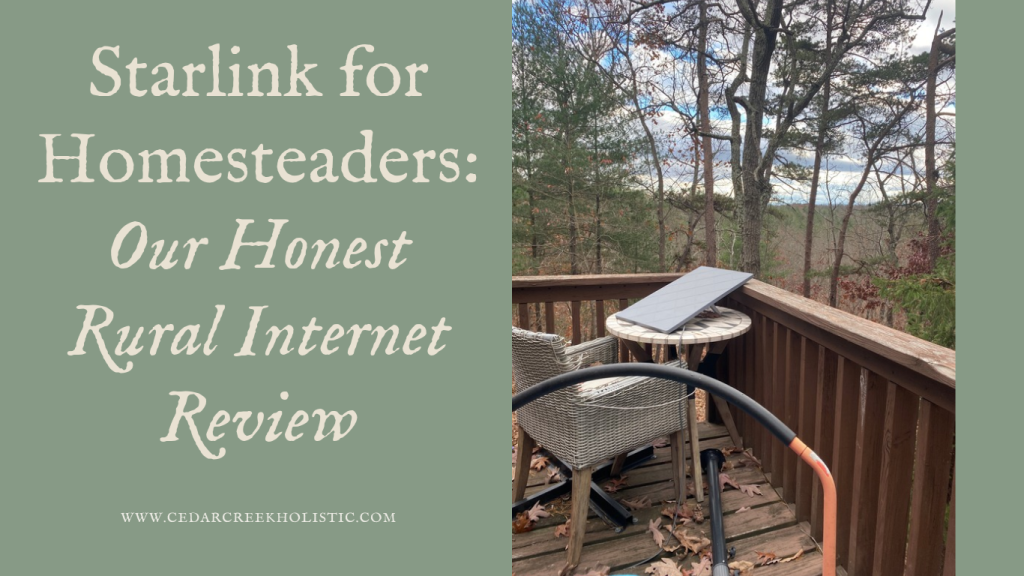
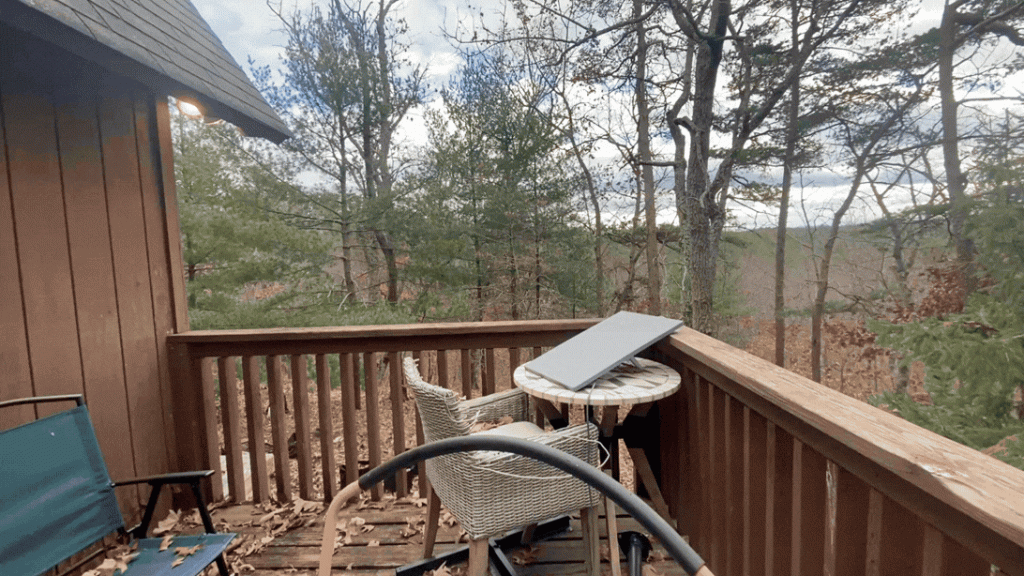
Currently, our Starlink dish is sitting in a temporary location on the corner of our deck. Eventually, I’d like to get it mounted higher, but that’s going to take a little more work than I’ve been wanting to deal with.
There are definitely some obstructions from the surrounding trees and our roof. However, they haven’t caused any meaningful problems for us.
We consistently get excellent speeds, up to the advertised max 100 Mbps on most days, and I’ve been happy with how well it works despite our less-than-perfect setup.
Every once in a while, we’ll experience a very brief interruption, usually just a second or so, but it comes right back. Other than those occasional blips, we’ve had no issues.
I was honestly surprised that we could get such good performance with the dish sitting where it is.
Can You Actually Work From Home With Starlink?
Absolutely. At least, that’s been my experience.
I run my own business from home, so having reliable internet is important. Between managing my website, communicating with clients, creating content, and handling all the other little things that go along with running a business, I need internet that I can actually depend on.
I’ve had no problems doing any of that with Starlink.
It’s also made everyday homestead life easier. Whether we’re looking something up, streaming, managing household tasks, or just using the internet like any other family, we finally don’t have to struggle with a set up that won’t cooperate.
After years of working around limited internet options, that’s a pretty big improvement.
What About Snow and Bad Weather?
One feature I thought was particularly interesting is Starlink’s built-in snow-melting capability.
The dish can actually heat itself to melt snow and help prevent accumulation from interfering with the signal. This is especially useful if you’re living somewhere that gets regular snowfall.
I haven’t experienced a snowfall with our current setup yet, so I can’t personally speak to how well that feature works. But I appreciate that snow management is something Starlink has built into the equipment.
Of course, that doesn’t mean it’s completely immune to weather. Heavy snow, extreme rain, and other conditions may still affect connectivity.
What Happens When the Power Goes Out?
This is one thing worth considering if you’re living rurally, especially if you’re in an area that experiences frequent power outages (ours goes out at least a few times a year).
Starlink requires electricity, so if your power goes out, your internet goes out too. It doesn’t have its own battery backup.
Personally, I just switch back to cellular data when the power goes out so I can keep up with outage updates and local news.
I also have a small solar-powered power bank that I really like for emergency situations. It’s been a great addition to our emergency supplies to keep phones charged in emergencies, but I don’t use it to power Starlink.
What About Starlink Mini for Travel?
Another interesting thing we’ve seen firsthand is how useful the Starlink Mini can be for people who travel or occasionally spend time in areas with poor cell service.
We have family who visit us and stay at a nearby Airbnb. The cell service there is even worse than what we have at home, so they’ve started bringing their Starlink Mini along with them. They’ve been really happy with it!
I think this is worth mentioning because rural internet isn’t just a challenge for people who live outside of town. If you travel, camp, stay in vacation rentals, or frequently visit places with limited or no cell coverage, having a portable internet option can be incredibly helpful.
The Starlink Mini is a smaller, portable option compared to the standard home setup, making it worth looking into if you need internet access while away from home.
Is Starlink Worth It for Rural Homesteaders?
For us, yes, absolutely!
If you’re living somewhere with limited options, Starlink is definitely worth looking into. Especially if you’ve been relying on less than ideal solutions.
I think rural living often means making compromises when it comes to utilities and services. Sometimes that’s just part of choosing to live outside of town.
But reliable internet doesn’t have to be one of those compromises anymore.
Whether you’re running a small business, working remotely, homeschooling, managing an online shop, or simply want to be able to stream a movie without fighting your internet connection, having a dependable set up makes all the difference.
Of course, every property is different. Trees, buildings, dish placement, and local coverage can all affect performance. I can’t promise you’ll have the same experience we have, but our wooded mountain property and imperfect installation haven’t been a problem.
Would I Recommend Starlink?
Yes. After making the switch, I’m still really happy with our decision.
We’ve gone from piecing together internet access through phone hotspots and borrowed devices to having a connection that lets me work at home without constantly worrying about whether the internet is going to cooperate.
That’s exactly what I needed. I still hope to get our dish mounted a little higher eventually, but for now, our temporary setup is doing just fine.
If you’re a fellow homesteader or rural homeowner who’s been struggling with internet options, I’d recommend checking it out.
Try Starlink With Our Referral Link
If you’re interested in giving Starlink a try, you can use my referral link below. The referral offer gives both of us a $100 reward when an eligible new customer signs up through my link, subject to Starlink’s eligibility requirements and terms.
It’s a nice little bonus for both of us!
Disclosure: This post contains my personal Starlink referral link. If you sign up through it, both you and I may receive a $100 reward under Starlink’s referral program. I have been using Starlink since early 2026 and am sharing my experience as an actual customer.

Comments