

Trying to conceive (TTC) can feel like a rollercoaster of emotions—hope, excitement, and sometimes frustration or confusion. If you’re in this season of life, it’s easy to get caught up in misconceptions or feel unsure about what’s “normal”. Let’s clear the air with some important truths about fertility and conception.
These lessons come from my own journey of navigating the ups and downs of trying to conceive, as well as my professional experience working with many women who have faced similar challenges.
1. It’s Normal for It to Take Time
Many women are surprised to learn that even with perfect timing, it can be completely normal for it to take up to a year to get pregnant. The chances of conceiving in any given cycle are around 25-30% for most healthy couples.
This statistic can feel discouraging, but it’s important to remember: the body is designed to create the best possible environment for a healthy pregnancy. Sometimes, this just takes time. Knowing this can help ease some of the anxiety that comes with each passing month.
The 2011 study How Long Does It Take the Average Couple to Get Pregnant? A Systematic Review of What We Know reviewed 15 studies, including data from 2,357 women, to estimate how long it typically takes couples to conceive. To ensure accurate and generalizable results, the analysis excluded studies with clinical or selected populations, those using fertility awareness methods, or those with incomplete data. The review found that 66.3% of women conceived within 6 months, and 81.3% became pregnant within 12 months. These findings highlight that most couples achieve pregnancy within 1 year even without fertility awareness charting and timed intercourse.
The 2003 study Time to Pregnancy: Results of the German Prospective Study analyzed 346 women using a symptothermal method (STM) of fertility awareness to time intercourse. It found that most couples conceived within six cycles, with 81% of all couples and 88% of truly fertile couples achieving pregnancy by this point. By 12 cycles, these rates increased to 92% and 98%, respectively. For couples still not pregnant after six cycles, around 50% were likely subfertile or infertile. The study emphasizes the importance of fertility evaluation after six unsuccessful cycles, as waiting until 12 cycles may delay critical care and treatment.
If you’ve been trying for several months and haven’t seen that positive test yet, take heart. While it’s hard to wait, this is often part of the natural process, not necessarily a sign that something is wrong.
When to Seek Help: If you’ve been trying to conceive for six months or more while charting your cycles, it may be time to seek support. I can help you refine your charting to ensure ovulation is being tracked accurately or guide you if you’re new to fertility awareness. I also provide recommendations for lab tests to discuss with your doctor and can refer you to a physician who specializes in using fertility charts as a diagnostic tool.
2. It Only Takes Once
Many people feel pressured to have intercourse every day or at least every other day during the fertile window, believing this maximizes their chances of conceiving. However, this level of frequency is often unnecessary and can sometimes create added stress or strain in a relationship. In cases where sperm count or quality is a concern, more frequent intercourse can actually reduce the chances of conception, as it doesn’t allow time for sperm to replenish.
From personal experience, I’ve conceived five out of six times when we had intercourse just once within a 3-4 day window around ovulation. This highlights that timing matters far more than frequency. One well-timed act of intercourse can be enough to achieve pregnancy, even when circumstances feel less than ideal.
When to Seek Help: If you’ve been timing intercourse based on your understanding of ovulation but are not seeing success, refining your fertility awareness charting can make a big difference. I can help you identify your most fertile days with precision by teaching advanced cervical mucus charting techniques. This is especially beneficial if you’re navigating challenges like frequent UTIs with sex or concerns about sperm quality, as it allows you to focus on the most optimal days for conception while reducing stress and frequency.
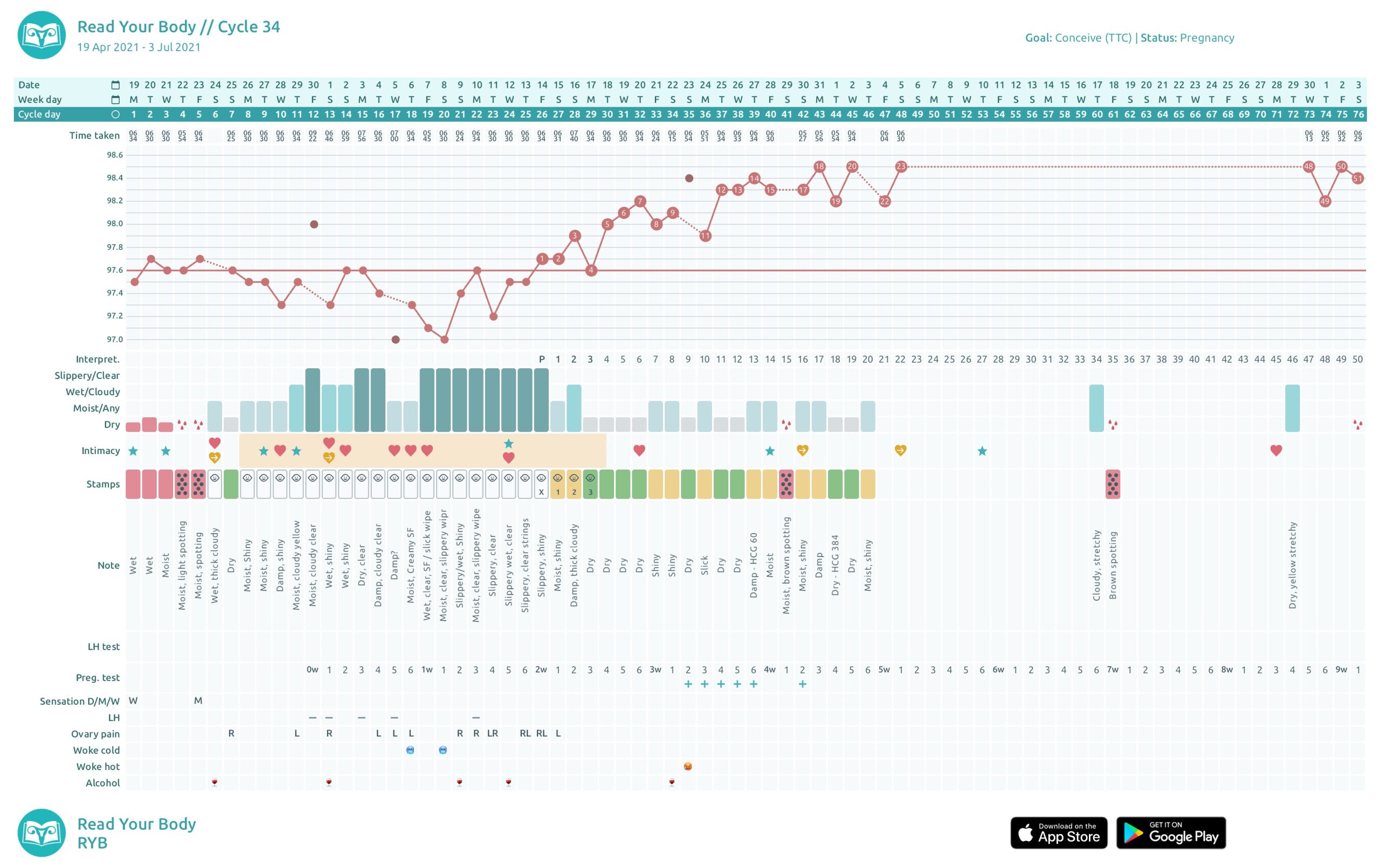
This was my first pregnancy and the first time I conceived with only one act of intercourse within a 3-4 day window of ovulation, which likely occurred around cycle day 26. Unfortunately I miscarried around 9 weeks. 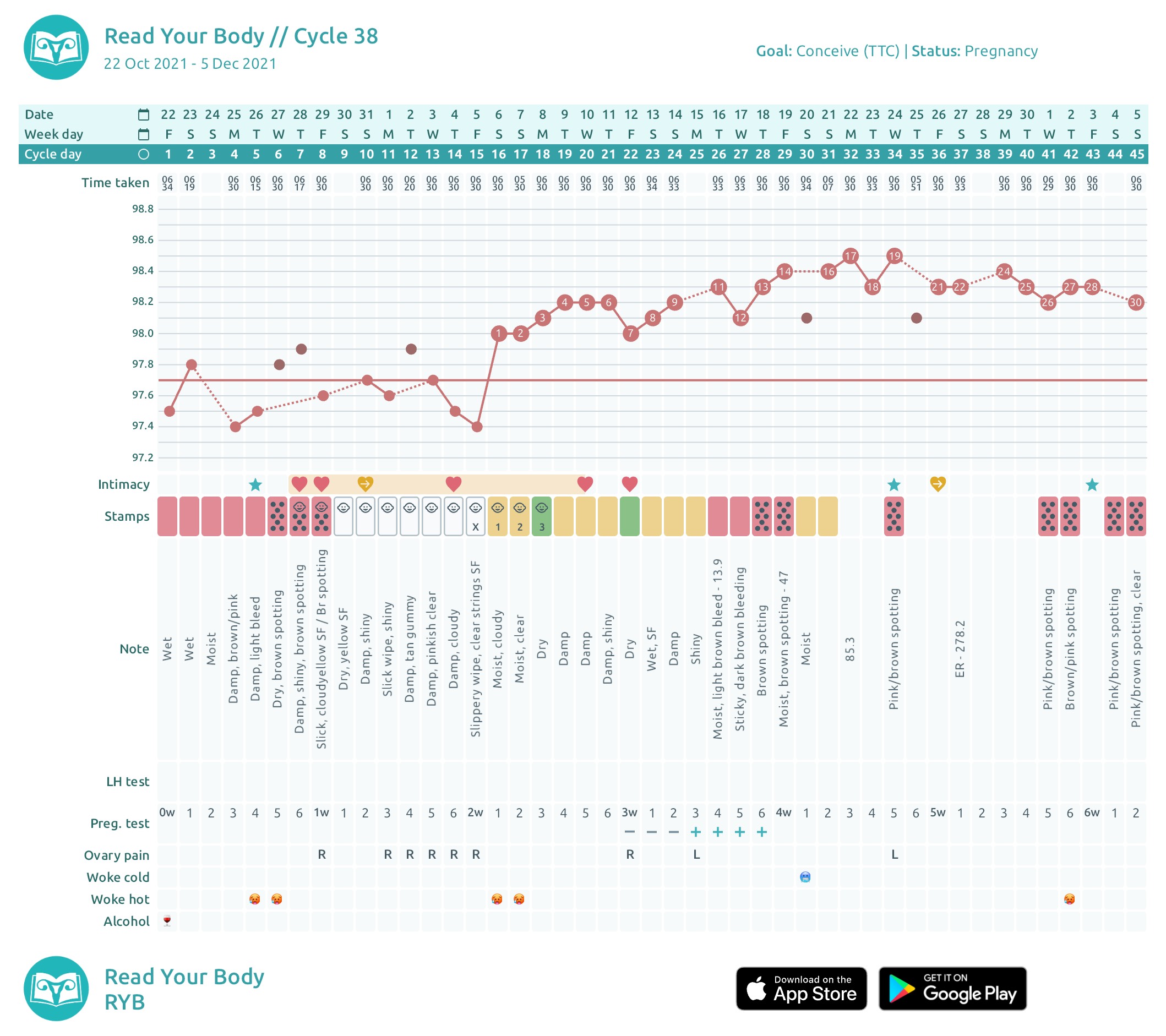
This is the second time I conceived and the second cycle we were TTC and only managed one day of intercourse within 3-4 days of ovulation, which was likely around day 15. I miscarried around 6 weeks. 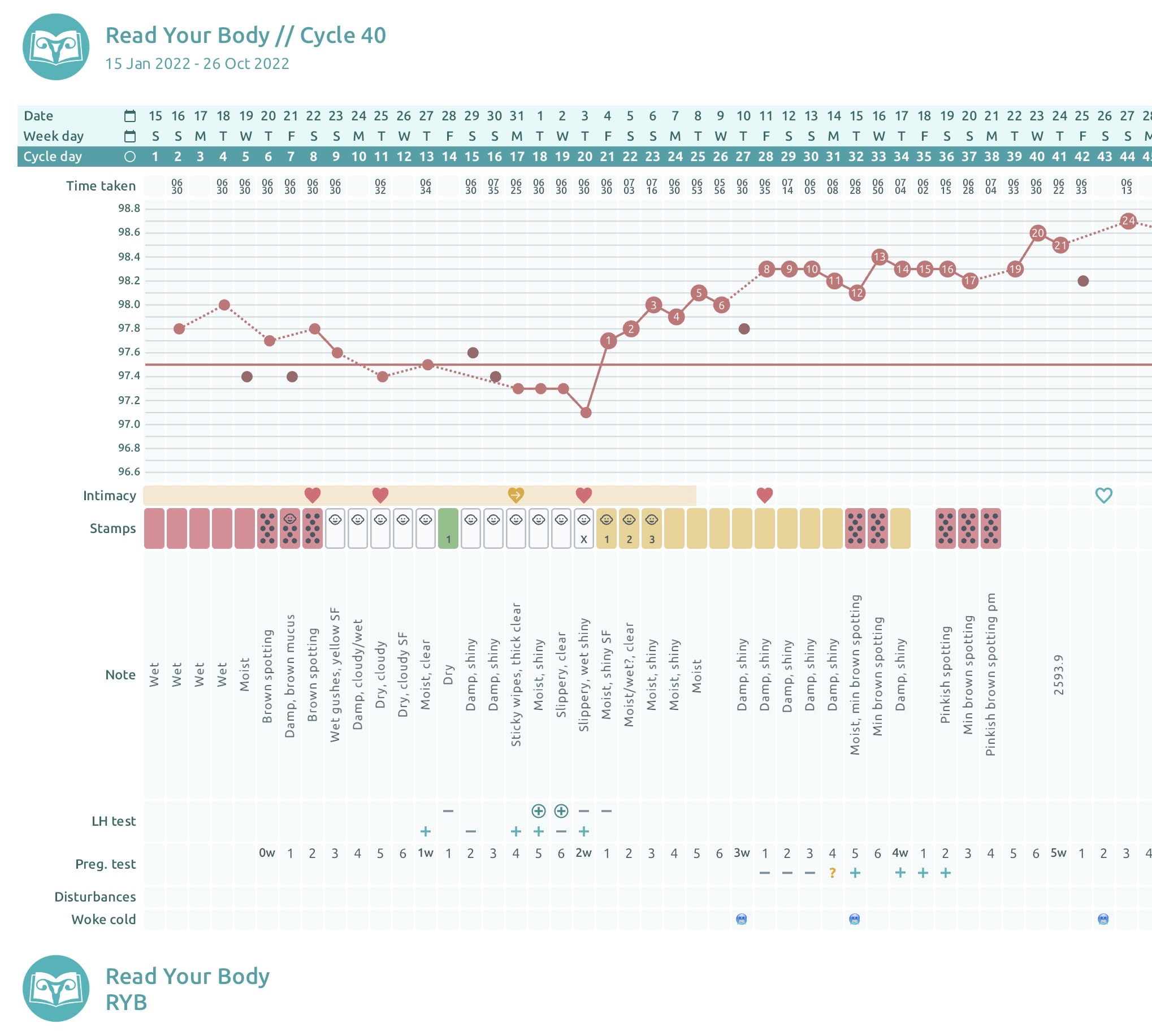
My third pregnancy and the third time with only one act of intercourse that could have lead to conception. With a lot of assistance from my doctor I was able to get to full term and had a healthy rainbow baby. 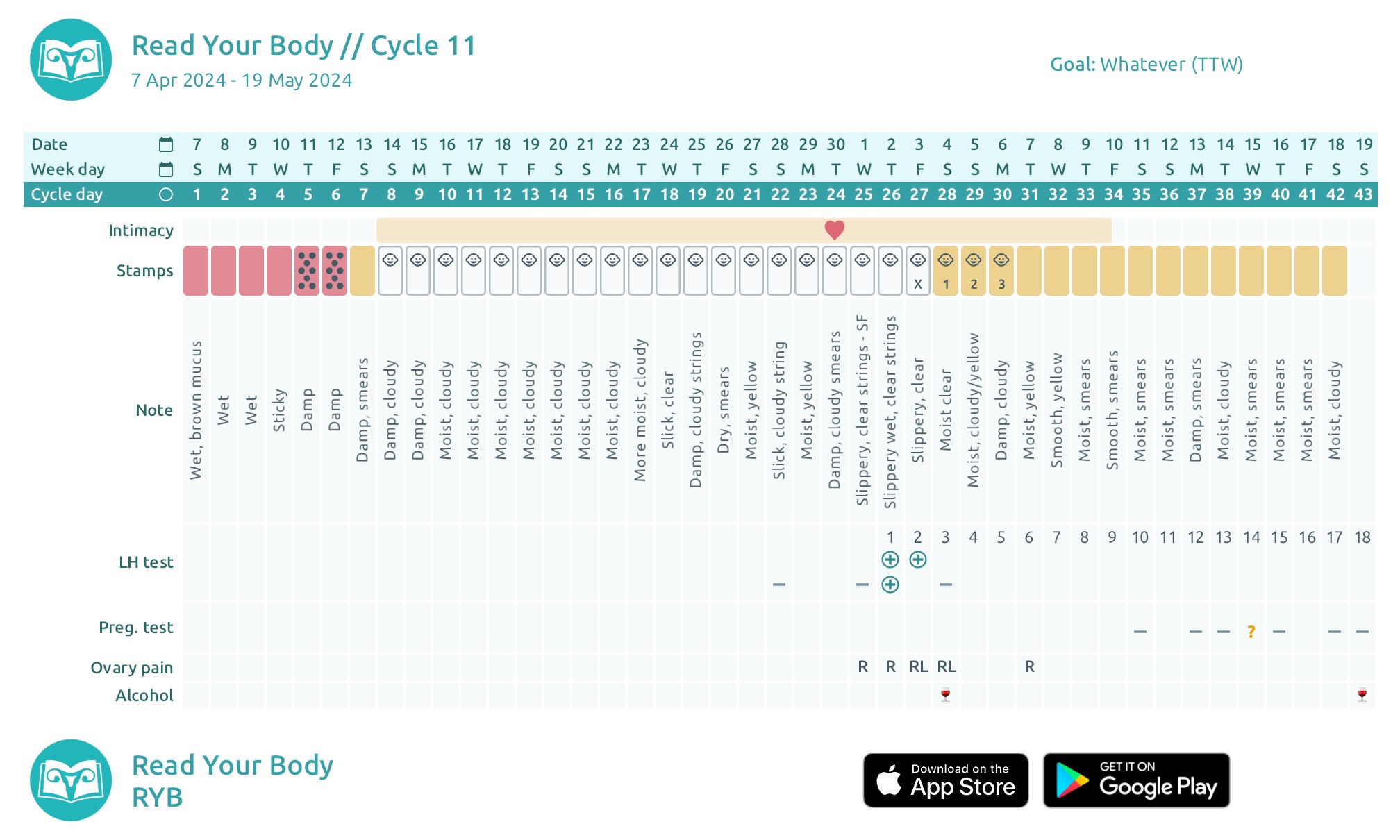
My 11th cycle postpartum and the 4th time we only had one day of intercourse that could have lead to conception but it ended in a chemical pregnancy with very faint positive tests on cycle day 39 that were negative the following day and a slightly longer than normal luteal phase. 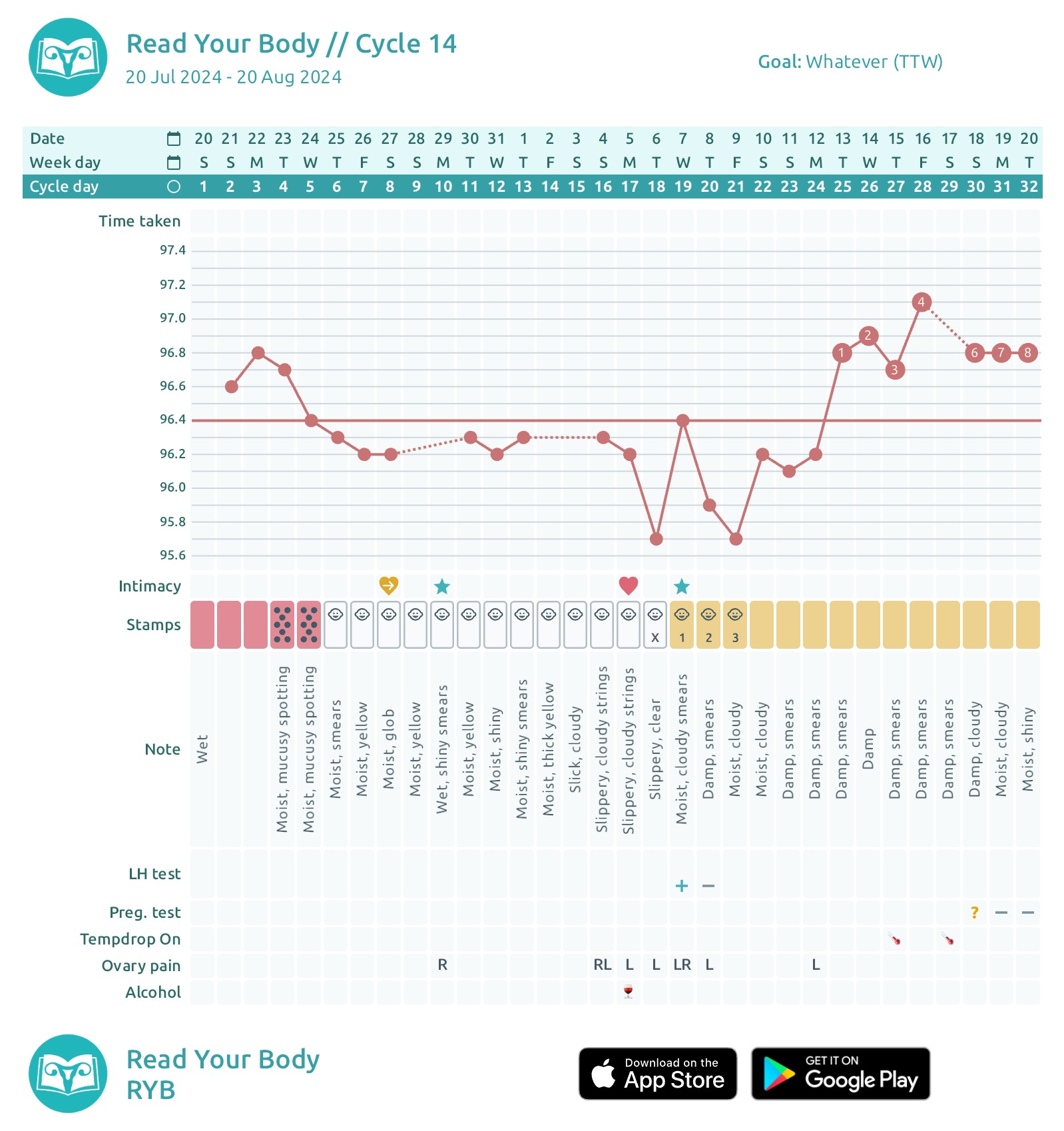
This is the only cycle that I had only one day of intercourse near ovulation and did not conceive.
3. Miscarriage Is More Common Than Many Realize
This is a tough truth but an important one: around 25% of pregnancies end in miscarriage, often very early on. Women who are charting their cycles to conceive are not only more aware of their fertility patterns, but they also tend to test for pregnancy earlier and more frequently than those who aren’t charting. This increased awareness may help recognize early pregnancy losses, which can feel more personal.
Many early losses happen due to chromosomal abnormalities or other factors beyond your control. If you’ve experienced a miscarriage, know that it’s not your fault and doesn’t mean you won’t conceive again. Understanding how common miscarriage is can help reduce the stigma and remind you that you’re not alone.
I myself have had three early losses out of five pregnancies. I know how heartbreaking and isolating this can be. Charting helped me identify potential issues and empowered me to seek support, and I’m passionate about helping others do the same.
When to Seek Help: Unfortunately, in mainstream medicine, doctors often wait until you’ve had two—or more commonly, three or more—miscarriages before offering further evaluation. This can be incredibly discouraging, but you don’t have to wait for multiple losses to seek answers. If you’ve experienced even one miscarriage, I can help you evaluate your charts to identify potential factors that may have contributed to the loss.
If contributing factors like PCOS, autoimmune conditions, or hormonal imbalances are suspected, you may be able to access help sooner by working with a Restorative Reproductive Medicine physician. I’m here to guide you through this process, offering charting support, insights, and referrals when needed. Don’t hesitate to reach out for compassionate, proactive care.
4. Fertility Lubricants Aren’t Necessary
With so much advertising around fertility-focused products, it’s easy to feel like you need a specialized lubricant to get pregnant. But for most couples, your body’s natural cervical mucus is the only fertility “lubricant” you need.
As you approach ovulation, your cervical mucus naturally becomes more fertile—it’s wet and slippery, creating the perfect environment for sperm to survive and reach the egg. For many women, this is sufficient, and adding a lubricant isn’t necessary.
If dryness is an issue, using a lubricant can be helpful for comfort. A 2018 study published in BJOG: An International Journal of Obstetrics and Gynaecology looked at whether using lubricants affects how long it takes to conceive. The study included 6,467 women in Denmark and North America who were trying to get pregnant and examined popular lubricants, including those marketed as “fertility-friendly.”
The results? Lubricant use didn’t reduce the chances of getting pregnant, and fertility-friendly options didn’t make conception more likely. The researchers concluded that couples can feel confident using the lubricant that works best for them, as it doesn’t hinder their ability to conceive.
If you do choose to use a lubricant, it’s important to select one with clean ingredients. Avoid options containing petrochemicals, parabens, or glycerine, as these can disrupt vaginal flora, harm sperm, or interfere with your body’s delicate endocrine system. Fertility-friendly lubricants with clean ingredients designed to mimic natural cervical mucus can be a good option if extra lubrication is needed, but it’s reassuring to know they’re not a requirement.
When to Seek Help: If persistent dryness or discomfort is interfering with your TTC journey, I can help you explore possible causes, such as hormonal imbalances like low estrogen. As a certified fertility awareness educator and herbalist, I can also provide recommendations for natural methods and herbal support to improve cervical mucus quality and overall reproductive health.
5. You Can Conceive Even with Long or Irregular Cycles
One surprising truth I’ve learned as a fertility awareness educator and through my own TTC journey is that conception is still very possible, even if your cycles are long, irregular, or unpredictable. While it can take more patience to track ovulation in these cases, it doesn’t mean your chances are lower. Charting your cycles with fertility awareness can help you identify when ovulation is occurring—even if it’s on day 35 or beyond—by combining tools like basal body temperature (BBT), cervical mucus observation, or ovulation predictor kits (OPKs) to pinpoint your fertile window.
That said, consistently long or irregular cycles usually indicate an underlying hormonal imbalance, which is worth investigating through hormone testing. Addressing these imbalances can improve your chances of conceiving and help reduce the risk of pregnancy loss, ensuring your body is as healthy as possible for conception and pregnancy.
Although this process may require patience, your cycles don’t always need to be “perfect” to achieve pregnancy. Many women with longer or irregular cycles have successfully conceived, and it’s entirely possible for you too.
When to Seek Help: If irregular cycles make it challenging to pinpoint ovulation or if you suspect you’re not ovulating at all, I can help you make sense of your charts and determine whether additional testing is needed. My custom charting program is designed to address these specific challenges, providing you with tailored guidance and tools to better understand your fertility. I also offer support for managing conditions like PCOS and other hormonal imbalances naturally, combining charting insights with recommendations for lifestyle adjustments, supplements, herbal remedies, and referrals for targeted hormone testing when needed.
A Note on PCOS
Many women with PCOS are told—or assume—that conceiving will be difficult or even impossible. In most cases, this simply isn’t true. PCOS does not mean you can’t conceive. While irregular ovulation or hormonal imbalances may make the process more challenging, it’s entirely possible for women with PCOS to get pregnant. For some, it may require extra support, such as tracking ovulation with more precision, targeted hormone testing, or tailored lifestyle changes, but it doesn’t mean pregnancy is out of reach.
If you’ve been diagnosed with PCOS and feel overwhelmed by the uncertainty, fertility awareness can provide a clear understanding of your cycles and help you recognize ovulation patterns, even when they seem irregular. With the right tools and support, conception is often much more achievable than many women with PCOS are led to believe.
Final Thoughts
Trying to conceive is a journey filled with hope, learning, and sometimes unexpected challenges. While it’s easy to feel overwhelmed by the unknowns, these truths are here to remind you that your body is beautifully designed for this process, even if it doesn’t always feel like it.
If you’re struggling to navigate your cycles or make sense of your fertility signs, fertility awareness can be an incredible tool to help you take control of your TTC journey. Whether you’re just starting or have been trying for some time, I’m here to guide and support you with evidence-based methods and a compassionate approach.
You don’t have to navigate this journey alone. If you’re ready for more clarity and confidence in your fertility, let’s connect. Together, we can uncover the patterns in your cycle and make sense of what’s next.
References
- Lynch, C. D. (n.d.). How long does it take the average couple to get pregnant? A systematic review of what we know. Department of Obstetrics and Gynecology, The Ohio State University College of Medicine, Columbus, OH.
- Gnoth, C., Godehardt, D., Godehardt, E., Frank-Herrmann, P., & Freundl, G. (2003). Time to pregnancy: Results of the German prospective study and impact on the management of infertility. Human Reproduction, 18(9), 1959–1966. https://doi.org/10.1093/humrep/deg366
- McInerney, K. A., Hahn, K. A., Hatch, E. E., Mikkelsen, E. M., Steiner, A. Z., Rothman, K. J., Sørensen, H. T., Snerum, T. M., & Wise, L. A. (2018). Lubricant use during intercourse and time to pregnancy: A prospective cohort study. BJOG: An International Journal of Obstetrics & Gynaecology, 125(12), 1541–1548. https://doi.org/10.1111/1471-0528.15218


Comments