
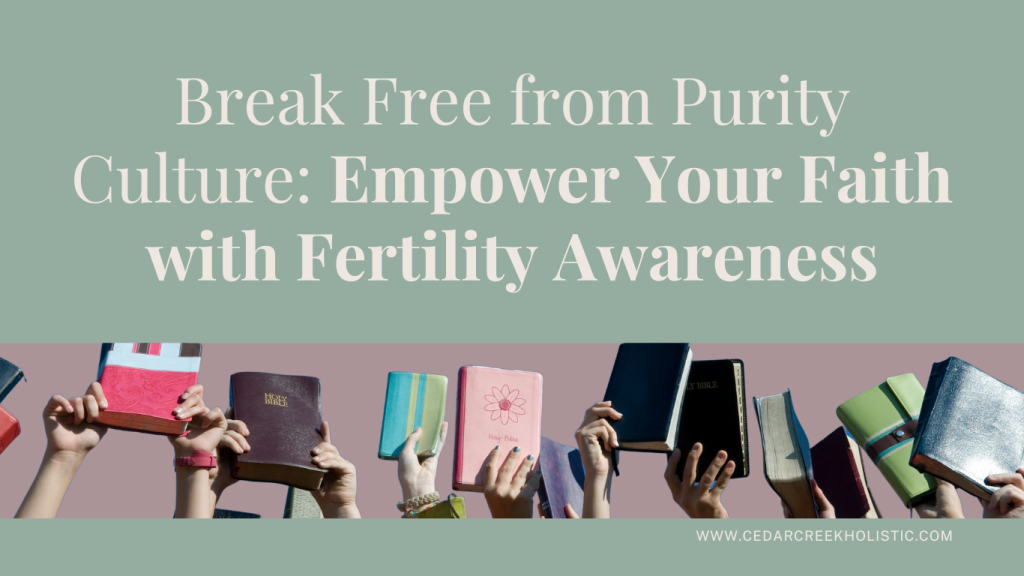
Navigating adulthood and marriage as a Christian woman raised in the midst of purity culture has been a complex journey. Like many women raised in church in my generation, I received strict messages about sex, modesty, and the importance of remaining “pure” and “saving yourself for your husband”. While these teachings were intended to protect, they often left me feeling confused about my own body and unprepared for the realities of intimacy. Over time, I came to realize that the messages I absorbed in my younger years did not equip me with the understanding or confidence needed to embrace my body, my faith, or my relationships in a healthy and fulfilling way.
As I began to learn more about fertility awareness and took control of my reproductive health, I discovered a path that felt more aligned with my faith, one that emphasized empowerment rather than shame and honored the intricate design of my body. Today, many of the women who choose to work with me are also Christian, seeking similar understanding and healing as they explore fertility awareness. Whether they are trying to avoid or achieve pregnancy, they desire a method that respects their faith, prioritizes their health, and strengthens their relationships.
For many of us who grew up in the Church, discussions surrounding sex and reproductive health were often steeped in fear and shame. This background left many Christian women feeling unprepared to understand their bodies or make informed decisions about their reproductive health. Now, we have the opportunity to reframe these conversations, embracing fertility awareness as a means to reconnect with our bodies, our faith, and our relationships.
Exploring Fertility Awareness as Christian Women
Natural family planning (NFP) was heavily shaped by Catholic doctrine, which forbids birth control for the purposes of avoiding pregnancy. The Catholic Church teaches that every sexual act within marriage should be open to life, making NFP one of the few permissible ways for couples to space out or avoid pregnancy. Through NFP, couples track a woman’s natural fertility signs to determine when to abstain from sex if they want to avoid pregnancy. This method honors the Church’s view of marriage and procreation while allowing some level of family planning.
For most Christian women, especially those not raised in Catholicism, the use of contraception is often not a point of debate; it’s simply a personal decision, much like any other healthcare choice. Some fundamentalist groups, like those who follow the Quiverfull movement (think Duggars), believe in rejecting all forms of birth control entirely, viewing it as contrary to God’s will. However, many Christian women who want to use some form of birth control choose the method that feels right for them, whether it’s hormonal birth control, IUDs, or another option.
Fertility awareness, on the other hand, isn’t as widely practiced among Christian women, even though it aligns beautifully with Christian values of stewardship over our bodies, intentionality in marriage, and honoring God’s design for our fertility. It’s time for more Christian women to recognize that fertility awareness isn’t just for Catholics; it’s an empowering, natural option that respects both their faith and their health.
Here’s why fertility awareness is not only an effective way to manage your fertility but also a beautiful way to glorify God:
- Honoring God’s Design: Fertility awareness allows us to work with the natural rhythms of our bodies, acknowledging the wisdom of God’s design. Our bodies are fearfully and wonderfully made, and fertility awareness gives us the tools to understand that design more deeply. It’s a way to cooperate with God’s creation rather than suppress it.
- Honoring Our Marriages: Unlike hormonal contraceptives, which often place the burden of family planning solely on the woman, fertility awareness involves both partners. This shared responsibility fosters trust, communication, and partnership within marriage. Couples using fertility awareness must work together, which can deepen intimacy and build mutual respect.
- Honoring Ourselves: Fertility awareness is more than just a birth control method, it’s a window into your overall health. By charting your cycles, you can gain valuable insights into your hormonal balance, stress levels, and even nutritional needs. Fertility awareness aligns with a holistic approach to health that many Christian women value, avoiding the side effects of synthetic hormones or invasive devices.
The Harmful Legacy of Purity Culture
Many of us grew up in the shadow of purity culture, a movement that emphasized virginity, sexual purity, and strict gender roles as key elements of faithfulness. This often left young Christian women with a one-sided, legalistic view of their sexuality. The message was clear: sex before marriage was wrong, and your worth as a Christian woman was tied to your ability to remain “pure” until marriage.
But what happens after marriage? Purity culture promised that if we saved ourselves for marriage, we would experience incredible relationships, but many of us found the reality to be much more complicated. Rather than fostering healthy intimacy, this mindset often left women feeling unprepared to embrace their bodies or their sexuality.
Though purity culture aimed to protect, it frequently led to confusion and shame around our desires and choices. And for many Christian women, sexual intimacy within marriage becomes centered around the husband’s needs. Countless Christian marriage books reinforce this by emphasizing a husband’s need for sex while overlooking or minimizing the sexual desire and needs of women.
Sheila Wray Gregoire and her Bare Marriage platform have been instrumental in helping many women heal from the damaging effects of purity culture. She has sparked vital conversations about how both purity culture and complementarian theology have shaped harmful dynamics within relationships, leaving many women feeling disconnected from their bodies and overlooked in their own marriages.
Sex as a Forbidden Topic: Purity culture made sex a taboo subject. For many women, this meant a lack of sexual education and little to no guidance on how to transition from purity to intimacy. Fertility awareness provides a way to start breaking down this stigma, giving us the tools to understand how our bodies function, both before and after marriage.
Healing through Knowledge: Learning to chart our fertility not only fosters a deeper connection with our bodies but also helps us heal from the impacts of purity culture. Engaging in a fertility awareness practice allows us to approach our health with respect and intention, moving beyond the guilt and confusion we experienced. This practice nurtures a holistic understanding of our reproductive health, something that many of us lacked during our upbringing.
Premarital Sex and the Christian Debate
In Christian circles, conversations about premarital sex often lead to valuable discussions that encompass differing viewpoints. Some Christians argue that the Bible clearly prohibits sex outside of marriage, citing passages like 1 Corinthians 6:18 and Hebrews 13:4. These verses are interpreted to mean that sexual purity reflects our dedication to God, with sex reserved for the covenant of marriage. From this perspective, engaging in premarital sex is seen as dishonoring both God and future spouses.
Conversely, others take a more nuanced view, acknowledging that the Bible’s teachings on sex were shaped by cultural contexts significantly different from our own. Many biblical figures considered holy—like King David, who had multiple wives, concubines, and even committed sexual sins against Bathsheba—lived in societies where such practices were commonplace. Similarly, King Solomon, known for his wisdom, had hundreds of wives and concubines. While these leaders were celebrated for their faith and leadership, their sexual choices do not necessarily align with modern Christian teachings on marriage and monogamy.
These examples prompt reflection on the cultural norms of biblical times, raising important questions about how we interpret the Bible’s messages on sex and relationships today. In contrast to those who believe that sex is solely for marriage and must adhere to strict rules, some Christians advocate for a more nuanced understanding that prioritizes love, respect, and responsibility within relationships. They encourage us to recognize that our bodies are temples (1 Corinthians 6:19), emphasizing that whether we choose to engage in sex responsibly or abstain until marriage, we should focus on honoring our bodies and nurturing healthy relationships that glorify God.
I recognize the importance of fostering open conversations about sex and relationships within the Christian community. This is a topic I myself am still navigating as I work through my own beliefs and experiences.
How Fertility Awareness Fits into the Discussion
Regardless of where you fall in the debate, fertility awareness can play a crucial role in helping Christian women make responsible, informed choices about their bodies and relationships. Whether you are committed to waiting until marriage or navigating a relationship before marriage, understanding your fertility equips you with the knowledge to make intentional, faith-aligned decisions.
This approach goes beyond merely avoiding or achieving pregnancy; it emphasizes personal responsibility for your reproductive health. If you choose to wait until marriage, fertility awareness can help you prepare for family planning when the time comes. If you’re sexually active before marriage, knowing your cycle gives you the ability to avoid unintended pregnancies and care for your reproductive health with intention. In both cases, fertility awareness allows you to be a steward of the body God gave you.
Fertility awareness invites a deeper conversation between partners, whether married or dating. It encourages both partners to be informed and responsible, engaging in ongoing discussions about family planning and health. Fertility awareness fosters mutual respect and cooperation, which are essential for a healthy marriage or relationship, regardless of the timing of sexual activity.
Reclaiming Our Faith and Our Bodies
As Christian women, we have the opportunity to reclaim the conversation around our bodies, our choices, and our faith. Fertility awareness is a powerful tool that not only equips us to make informed decisions about family planning but also helps us heal from the harmful effects of purity culture. It invites us to embrace our bodies, take responsibility for our health, and glorify God through our choices.
Whether you are waiting for marriage or already navigating these questions in a relationship, fertility awareness provides a path to empowerment and deeper faith. And as a fertility awareness educator, I feel strongly about helping to facilitate these conversations and transformations.
If you’re ready to explore this approach, I’m here to guide you on your journey to understanding and honoring your fertility in a way that aligns with your values and your faith.
A Note on the Foundations of My Services
As a fertility awareness educator, my focus is on providing non-judgmental, personalized support tailored to your unique needs and goals. While I educate on the Catholic origins of fertility awareness in my programs, my services are not religion based and are welcoming to everyone, regardless of religious or personal beliefs.
Discussions of faith are only introduced if you want to explore them. My mission is to create a safe space for you to navigate fertility awareness and reproductive health without feeling confined by specific religious narratives. Ultimately, my goal is to empower you to take charge of your health journey, wherever that path may lead.
Don’t hesitate to reach out to me or schedule a free consultation if you want more information on how I can help you!
Additional Resources
- She Deserves Better: Raising Girls to Resist Toxic Teachings on Sex, Self, and Speaking Up by Sheila Wray Gregoire, Rebecca Gregoire Lindenbach, Joanna Sawatsky
- The Great Sex Rescue: The Lies You’ve Been Taught and How to Recover What God Intended by Sheila Wray Gregoire, Rebecca Gregoire Lindenbach, et al.
- The Good Girl’s Guide to Great Sex: Creating a Marriage That’s Both Holy and Hot by Sheila Wray Gregoire
- The Seven Principles for Making Marriage Work: A Practical Guide from the Country’s Foremost Relationship Expert by John Gottman PhD, Nan Silver
- Come As You Are: Revised and Updated: The Surprising New Science That Will Transform Your Sex Life by Emily Nagoski Ph.D.
- Fertility Awareness & Women’s Health Facebook Group


Comments